
The Journey Home: What Winning Really Looks Like
By Shazad
“Ah, how shameless the way these mortals blame the gods. From us alone, they say, come all their miseries, yes, but they themselves, with their own reckless ways, compound their pains beyond their proper share.”
Attributed to Zeus of Greek Mythology
The ancient Greek poet Homer composed the Odyssey, an epic poem, around the 8th century BC. It's the story of a warrior trying to get home after the fall of Troy — a journey that should have taken weeks and instead took twenty years. Storms, monsters, gods, temptation, betrayal, near-death and near-surrender at almost every turn. It's been told and read for nearly three thousand years by humans across the world.
The Odyssey is not just a great adventure story. It's a map of something deeply human. The struggle isn't with the sea or the monsters. It's always internal and relatable to everyone, regardless of their culture, tribe, or nation. The lessons Homer embedded in that story are as sharp today as they were when they were first told around a fire with great drama and enthusiasm.
I share three ideas or lessons that resonate with me after seeing Christopher Nolan's adaptation in its full IMAX glory. A must-watch experience for everyone who wants to be inspired, entertained, and transported to another time and place!
Lesson One: Winning the wrong thing is still losing.
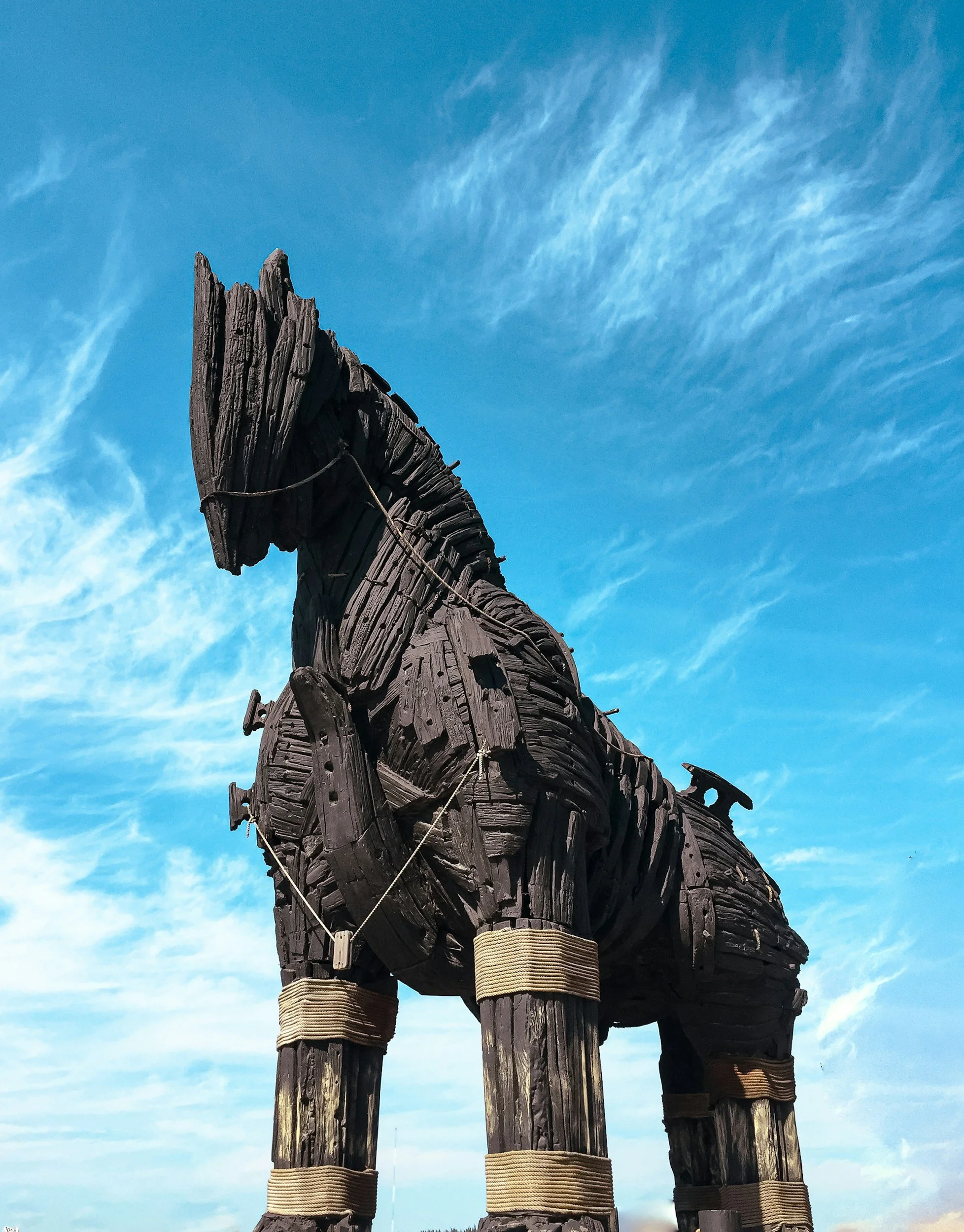
Odysseus won the Trojan War. He and his men built a wooden horse to deceive the people of Troy into letting the hidden Greek soldiers into their fortress. Once inside, he fought brilliantly and came out alive, with Helen of Troy returned to the Greeks. By almost any measure, that's a victory. But it felt hollow and insufficient. The Odyssey opens with him sitting on a rock, weeping, staring at the sea. Ten years of war. Everything he had to give. And what did he have to show for it? All his men were dead. His beloved home was in chaos. His faithful and patient wife was besieged by dozens of men pressuring her to remarry so they could replace Odysseus as the King of Ithaca.
Homer’s point is that a hollow victory is one where you achieve the goal but lose the life and joy you actually wanted.
We do this more than we admit. We chase the promotion and sacrifice the relationships that make the job worth having. We grind toward a number and forget why we wanted it. We win the argument and damage the friendship. The Trojan War was ten years of effort pointed at exactly the wrong thing — and Troy was nothing but rubble and ash. The storybook version of the reason for the war was to return Helen of Troy to her husband, Menelaus, the King of Sparta. The real reason was probably the fact that Troy (in modern-day Turkey) held a strategic position near the Dardanelles, allowing it to control profitable Black Sea trade routes and tax shipping traffic. The Greeks wanted to gain control of this area and were willing to go to years of war to achieve their geopolitical goals at any cost.
The question worth asking before you go all in isn't just, "Can I win this?" It's: is this worth winning, and what is this journey really about? What will “Winning” cost me in the end?
Lesson Two: Temptation doesn't look like danger. It looks like relief.
The monsters in the Odyssey — the Cyclops, Scylla, Charybdis — are terrifying. But Odysseus gets past all of them. What nearly destroys him repeatedly isn't brute force. It's seduction, temptation, a desire for comfort.
The Lotus Eaters didn't threaten his men. They offered them flowers that tasted like forgetting. His crew ate them willingly — and simply stopped wanting to go home. Calypso didn't imprison Odysseus through force. She offered him immortality and all worldly pleasures. Who turns that down? Odysseus did. Eventually. After many years in a hazy existence, trying to remember who he was and what he had to return to.
And then there were the sirens — creatures whose song was so beautiful that sailors steered directly into the rocks trying to reach it. Odysseus desperately wanted to hear their song. So he had his men tie him to the mast and plug their own ears with wax. He felt the pull. He screamed at them to untie him. He just made sure in advance that they couldn't. That's the insight. He didn't resist the temptation in the moment — he built a structure before the moment arrived that made giving in impossible. He tasted some of the madness of the Siren’s song without completely losing himself and his men to the certain death that would have brought upon them all.
The sirens in the story offered Odysseus absolute knowledge of the past and future, specifically tailored to his desire for wisdom. He was a curious and adventure-seeking man. The sirens in the story knew exactly what to tell him to keep him amused and curious so he would forget his main goal. This is very similar to the echo chambers on social media today. We are attracted to things we are already leaning towards, and we get sucked into endless rabbit holes by the algorithms designed to keep us clicking, tweeting, or scrolling through infinite content that will never satisfy us in the end. The brain rot is real and just as damaging as the lotus flowers in the story.
Distraction, temptation, and endless entertainment don't always announce themselves. It arrives looking like a perfectly innocent, maybe even a “reasonable,” choice for hours a day. What is your strategy to resist crashing into the metaphorical rocks and becoming another victim of the modern-day sirens?
Lesson Three: Know who you are, or someone else will decide for you.
There's a moment in the Odyssey that always strikes me. When Odysseus encounters the Cyclops, he introduces himself as "No-man." It's clever — when the Cyclops screams that No-man is hurting him, his neighbours assume nothing is wrong and go back to sleep. Odysseus escapes.
But as he sails away, he can't help himself. He leans over the side of the boat and shouts his real name across the water. I did this. I am Odysseus, son of Laertes. The Cyclops, now knowing his name, calls on Poseidon to curse him. And Poseidon does — adding years of suffering to a journey that was already brutal.
Homer didn't put that scene in by accident. It's a portrait of someone who knows himself well enough to survive but not quite well enough to thrive. Odysseus understood his cleverness. He underestimated his pride.
Knowing your true nature means knowing both what you're capable of and what you're susceptible to. The strengths that make you effective and the blind spots that undo your best work. Most people know the first part. Far fewer are honest about the second.
The people who navigate the world most effectively aren't the ones with the fewest weaknesses. They're the ones who've looked at themselves clearly enough to know where they need the wax in their ears — where they need the structure, the guardrail, the trusted person who can tell them the truth. Self-reflection and self-improvement are not a nice-to-have or a ‘luxury’ for older people or the rich. It’s our job every day in order to get through the many adventures we will face in this life.
That kind of self-knowledge isn't comfortable to get to. But it's the only kind that actually protects you from your worst habits and the deception of others.
---
The Odyssey is three thousand years old, and it hasn't aged. Because Troy is no more. The monsters are just metaphors, and the temptations, the hollow victories, the question of who you really are the enduring ideas that remain to help you navigate your own journey in life.
Have An Awesome Day Every Day!
(As an Amazon Associate, we earn from qualifying purchases)
Go to this link and order your copy of the Awesome Life book today!
Click Here: Buy The Awesome Life Book!
Enjoyed this? Join 300+ readers getting our weekly Wednesday Mental Boost — 5 ideas from history, philosophy, and science in under 30 minutes. Click here to join the Awesome Community: awesomelifebook.com